
If you’ve started researching an Alaska cruise, you’ve probably noticed something quickly—this isn’t like planning a Caribbean vacation.
Alaska cruises come with a lot of questions, more decisions, and a quite a bit of second-guessing.
For many travelers, this isn’t an ordinary trip. It’s a bucket list experience, something you do once in a lifetime, so getting the details right is extra important. This guide walks through most common questions related to Alaska cruising—so you can plan your Alaska cruise with confidence and avoid the most common regrets.
What You’ll Find in This Guide
When Is the Best Month to Cruise Alaska?
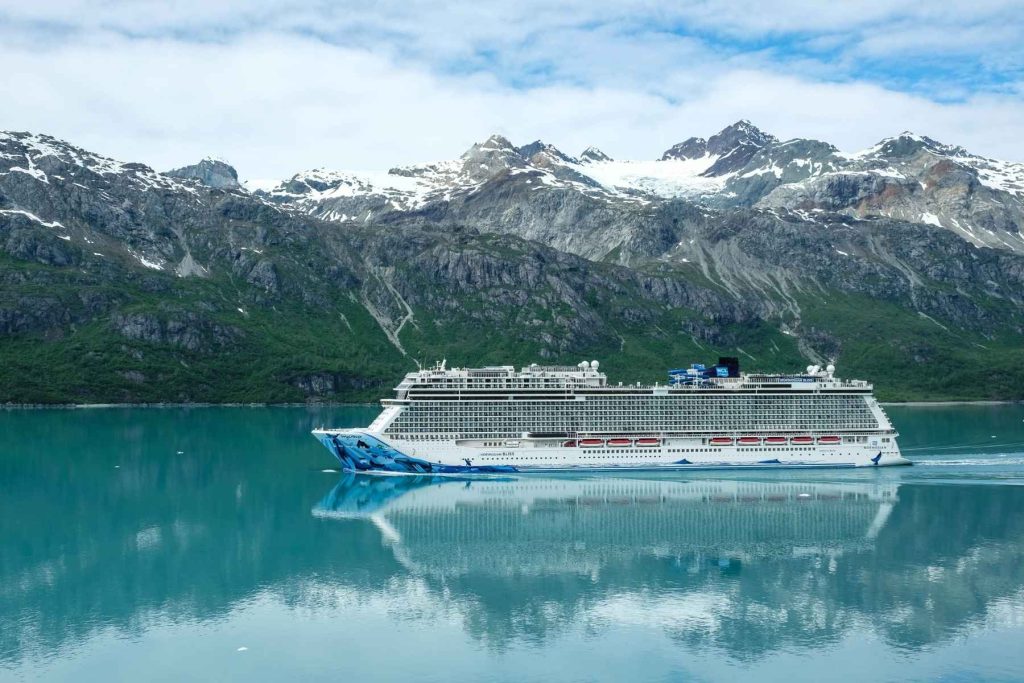
Alaska’s cruise season generally runs from mid-May through late September, with the most departures occurring in June, July, and August. Each month has its own personality, and the “best” one really depends on the experience you’d like to have.
Alaska Cruise in May: The Hidden Gem (With a Few Trade-offs)
May is shoulder season in Alaska, and it has real appeal for travelers seeking a lower price and the crowds to match. The trade-off is weather. May can still be cool and overcast, and you’re more likely to encounter rain. Average high temperatures range from 53° to 62° but may feel cooler on drizzly overcast days. Late May is probably the standout timeframe, with warming temps, decreasing rain and far fewer mosquitos than mid June through summer months.
Pros and cons of sailing in May
- The famous wildflowers haven’t peaked yet, and some wildlife viewing is less reliable this early.
- Late May is increasingly popular because the days are dramatically long (we’re talking nearly 18 hours of daylight in some areas), yet snow still caps the mountains and waterfalls are rushing from snowmelt.
- Wildlife viewing: While not as prolific as June, animal sightings are not uncommon, including seals and sea lions warming on ice chunks.
- Some excursions may not yet be operating.
Who Should Sail in May: May Alaska cruises are best for: Budget-conscious travelers or repeat Alaska cruisers who want smaller crowds, and anyone who doesn’t mind the chance of cool, gray days in exchange for lower prices.
Alaska Cruising in June: The Sweet Spot for Many Travelers
June is widely considered one of the best months for Alaska. The weather has warmed up enough to be genuinely comfortable, wildlife is active, and the dramatic daylight continues. Average high temperatures range throughout the 60s, with the chance for rain and cloud cover diminishing as the month progresses.
Pros and Cons of Sailing Alaska in June:
- Wildflowers are blooming, bears are emerging, baby animals may be sighted, and you have a good chance of catching migrating whales.
- June is popular, so ships are full, excursions book up fast, and the ports can feel busy — particularly Juneau, Skagway, and Ketchikan, where several ships may be docked at once.
- Cruisers should plan to book excursions early if sailing in June.
- With the solstice occurring mid month, June has the longest days of the sailing season, with up to 22 hours of daylight, depending on how far north you sail.
Best for: First-time visitors who want reliable weather, peak wildlife activity, and the full Alaska experience without the heat of midsummer.
Alaska Cruising in July: Peak Season, Peak Everything
July is the warmest month in Alaska (think highs in the 60s to low 70s°F in coastal towns), and the wildlife viewing is at its best. Given the weather conditions, sunnier skies and avid opportunities to spot wildlife, it’s also one of the most popular months to cruise. Most children are on summer school break, so it is also a popular time for families as well.
Pros and Cons of Sailing Alaska in July
- Humpback whales are plentiful in waters around Juneau, salmon are running, and bears are highly active in the upper mountain slopes.
- Snow cover has largely melted in lowland areas, leaving everything green and lush.
- It’s berry season, with wild blueberries, salmonberries and other native fruits ripening along hiking trails and mountain slopes.
- It’s also the busiest time, with higher pricing and full ships
- Popular excursions like helicopter glacier landings can sell out weeks in advance. If you’re sailing in July, plan ahead and book your shore excursions as soon as they open.
Who Should Sail Alaska in June: Best for families who want warm weather and anyone who wants to see abundant wildlife but doesn’t mind crowds.
Cruising Alaska in August: Still Excellent, Slightly More Relaxed
August is nearly as good as July — still warm, still excellent for wildlife, and the shift toward shoulder season means crowds begin to thin as the month goes on. You may see slightly lower prices in late August compared to early July.
Pros and Cons of Sailing Alaska in August
- Whale watching is fantastic, and bears are especially visible as salmon runs intensify. Some travelers find late August actually better than July for bear sightings, though tours are usually required to see them. Rainy days start to return as the month wears on but temperatures remain warmer than those found in September. S
- Rainy days start to return as the month wears on but temperatures remain warmer than those found in September.
Best for: Travelers who want peak-season quality with slightly fewer crowds and potentially better prices, especially in the second half of the month.
Cruising Alaska in September: The Underrated Finale
September is Alaska’s secret, far less popular than summer peak months and a dazzling color spectacle on mountainsides as foliage begins to change. Crowds are gone but temperatures are cooling, as rainy conditions return. September cruisers should exepct temperatures similar to May, with daily highs averaging between 51° to 62°. Skies are overcast 59% of the time and with a 38% chance of rain.
Pros and Cons of Sailing Alaska in August
- Cruise prices drop noticeably in September as children return to school, and the ports feel almost relaxed.
- Some excursion operators begin winding down operations by mid-to-late September, so your options may be more limited.
- Fall foliage is spectacular particularly when accompanied by snowfall
Best for: Budget travelers, those who dislike crowds, retirees and 50+ travelers with flexibility, and anyone who loves dramatic autumn scenery or more anticipated Alaska scenery (think snow).
Quick Reference: Month-by-Month Summary
| Month | Weather | Crowds | Wildlife | Price |
| May | Cool, variable | Low | Good | Lower |
| June | Mild, good | Moderate-high | Excellent | Moderate-high |
| July | Warmest | Peak | Peak | Highest |
| August | Warm-mild | Moderate | Excellent | Moderate-high |
| September | Variable, cool | Low | Good | Lower |
Alaska Cruise Itineraries: Inside Passage, Glacier Bay, and Everything in Between
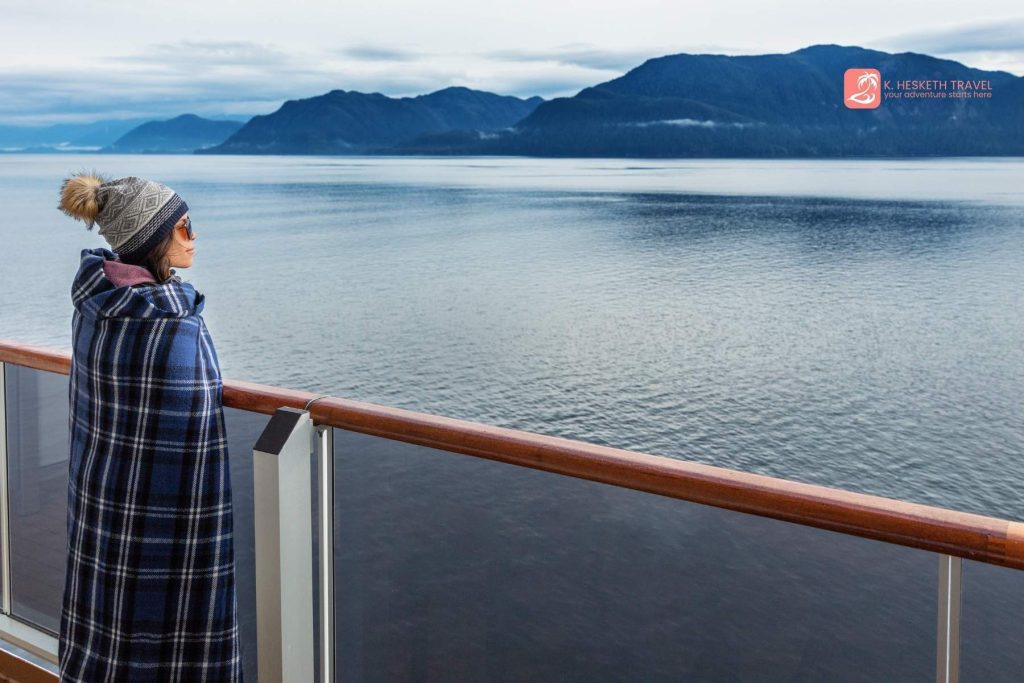
One of the first things that surprises new Alaska cruise shoppers is realizing that not all itineraries are the same — and the differences matter. Here’s how to make sense of the main options.
Inside Passage Roundtrip vs. Gulf of Alaska One-Way
Inside Passage roundtrips depart and return to the same port (typically Seattle or Vancouver) and spend the entire cruise sailing the protected waters of Southeast Alaska. Classic ports include Ketchikan, Juneau, Skagway, and Icy Strait Point or Sitka, depending on the itinerary. These routes are wonderfully scenic from start to finish and don’t require flying in and out of different cities.
Advantages of Sailing the Inside Passage:
- Calmer waters: Sheltered by islands, this passageway remains calmer than the open ocean, making it more ideal for those concerned about motion sickness.
- Amazing scenery: Passengers are afforded views of jfords, glaciers and wildlife from the ship.
- Convenient access to ports: Cruises include stops in iconic Alaskan towns, such as Skagway and Ketchikan, with short sailing distances between.
- Convenient travel: US cruisers may embark from and return to Seattle, for easy travel options.
For most first-time Alaska cruisers, an Inside Passage roundtrip is the easiest entry point into Alaska cruising— the ports are classic, the planning is simpler, and the scenery throughout is extraordinary.
Gulf of Alaska One-Way Itineraries
This itinerary, often called “Voyage of the Glaciers”, travels between Vancouver or Seattle and Anchorage (via Seward or Whittier), sailing through Southeast Alaska and then crossing the Gulf of Alaska. These itineraries often visit Hubbard Glacier, College Fjord, or Kenai Fjords — different glacier experiences than the Inside Passage offers. Because you’re traveling one way, you’ll need to fly in and out of different cities (or add a land tour), which adds cost and complexity but can make for a more varied experience.
Alaska Cruise Itineraries that Feature Glacier Bay National Park: What Makes It Special
If you ask most seasoned Alaska cruisers to name one thing they’ll never forget, Glacier Bay National Park comes up again and again.
Glacier Bay is a UNESCO World Heritage Site and one of the world’s most extraordinary examples of glacial retreat and ecological transformation. In the 18th century, the entire bay was covered by a massive glacier. Today, it’s a 65-mile-long fjord filled with tidewater glaciers that calve — sometimes dramatically — into the water. The most iconic is Johns Hopkins Glacier, a massive, deeply crevassed river of blue ice that fills the upper reaches of the bay.
Sailing into Glacier Bay is an all-day experience. A park ranger typically boards the ship and narrates as you cruise deeper into the bay, watching for wildlife (humpbacks, orcas, sea otters, bears on the shoreline) and positioning near the glaciers as enormous chunks of ice calve into the water with a thundering crack. Time stops a little bit. People who thought they weren’t “glacier people” find themselves standing at the rail for hours.
Here’s something important to know when comparing itineraries: not all cruise ships can visit Glacier Bay. The National Park Service strictly limits the number of vessels allowed into the park each day to protect the fragile ecosystem and wildlife.
Access is allocated through a permit system, and permits go to cruise lines that have established relationships and long-standing access commitments. The lines with the strongest Glacier Bay presence include:
- Princess Cruises holds significant Glacier Bay access, taking more passengers into this protected area than any other line.
- Holland America Line has more Glacier Bay permit days than any other major cruise line, cornerstone tenet of their Alaska program for decades.
- Norwegian Cruise Line has regular Glacier Bay access on select itineraries.
- Cunard offers occasional access on the Queen Elizabeth.
When comparing itineraries, look specifically for “Glacier Bay National Park” in the port list — not just “glacier cruising.” Not every Alaska cruise includes it.
Do You Have to Sail Glacier Bay or Are Other Glaciers Just as Good?
If your itinerary doesn’t include Glacier Bay, you may still visit spectacular glacial scenery — and it’s worth knowing what you’ll see.
Tracy Arm Fjord (with Sawyer Glacier)
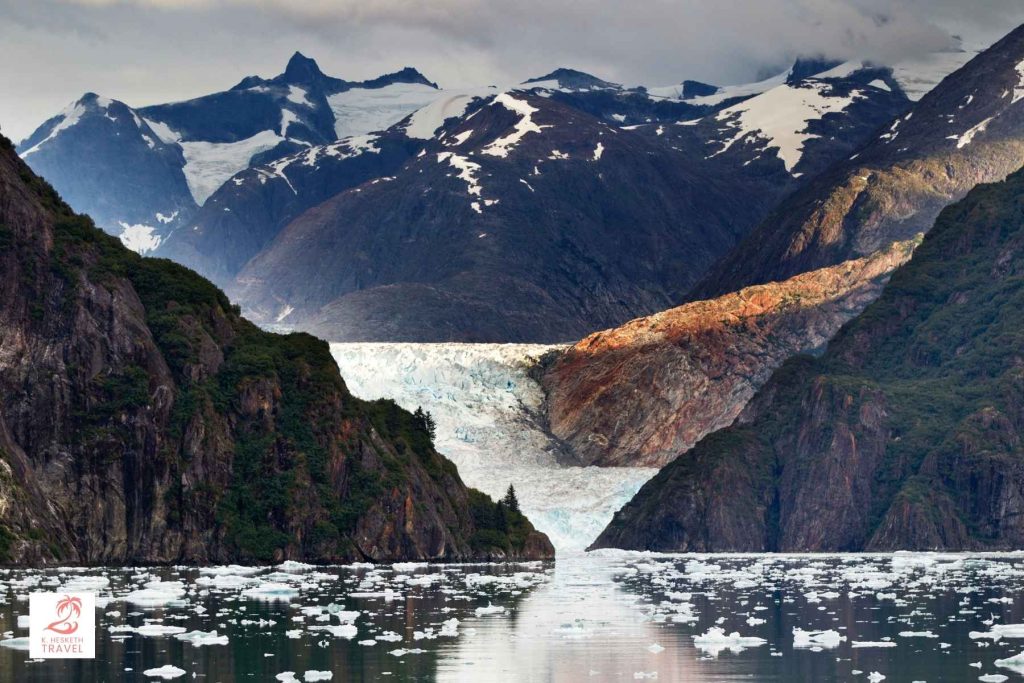
Visiting Tracy Arm Fjord is the most common Glacier Bay alternative on Inside Passage itineraries. It’s a dramatic, narrow fjord with steep granite walls, floating icebergs, and twin Sawyer Glaciers at the end. It’s genuinely stunning — but access can be tricky. Ships don’t always make it to the glaciers depending on ice conditions, and the experience is typically shorter than a full Glacier Bay day. Some lines send small tender boats up the fjord separately, which is worth doing if offered.
Endicott Arm (with Dawes Glacier)
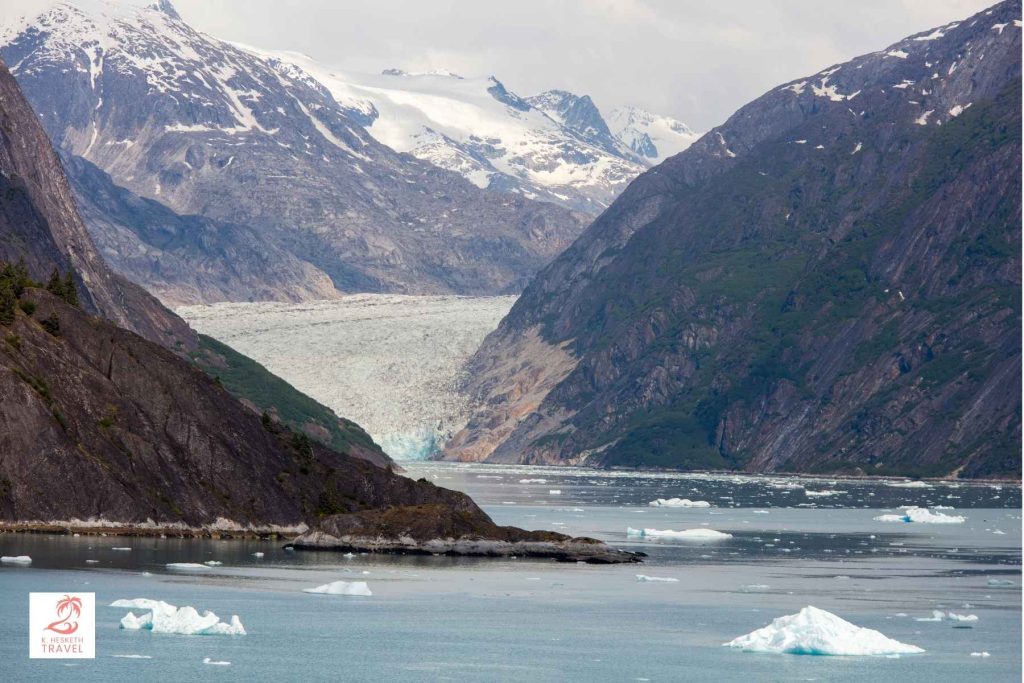
Endicott Arm is similar to Tracy Arm but somewhat less visited and arguably even more dramatic. The sheer towering cliff surrounding the fjord are home to waterfalls and frequent wildlife sightings, including seals, mountain goats and bears. The ice flows surrounding Dawes glacier can be thicker and harder to navigate, when ships do make it — the viewing is spectacular. TIP: Sailings in July and August have a greater chance of reaching Dawes Glacier, since warming summer temps have had time to melt some of the ice.
Hubbard Glacier
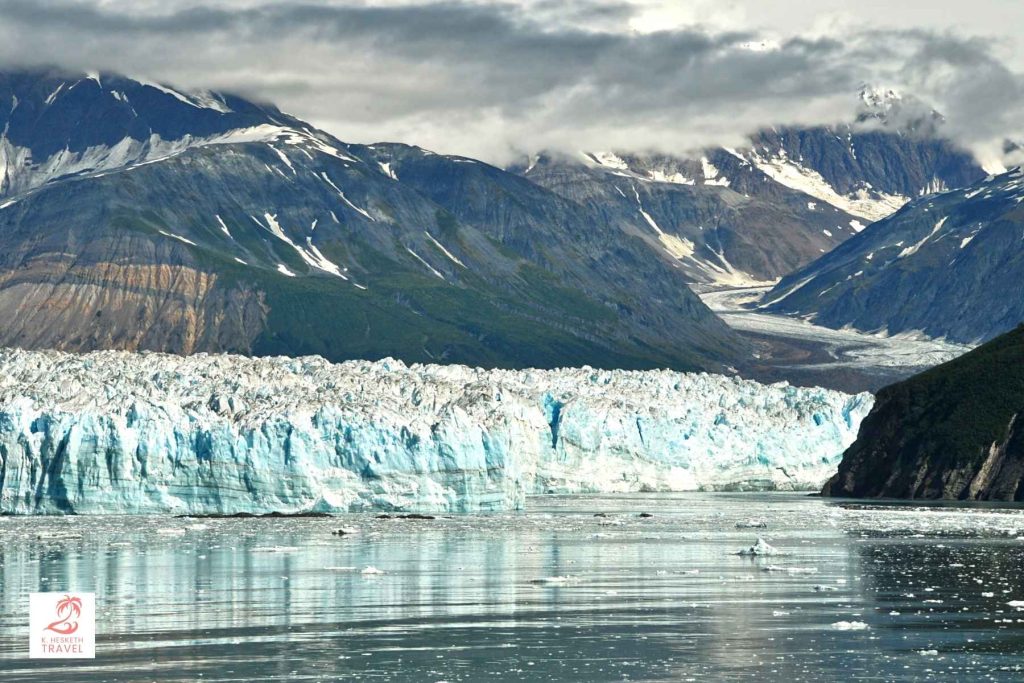
Hubbard Glacier (typically on Gulf of Alaska itineraries) is the largest tidewater glacier in North America — nearly 7 miles wide at its face. It’s massive and active, and recognized for frequent calving, a site most Alaskan cruisers hope to witness. This glacier differs from the others in that it is advancing rather than retreating, making for an awe-inspiring experience, according to most cruisers. Because ships simply pull up in front of the glacier face (rather than sailing a narrow fjord), views are consistent and accessible from anywhere on the ship.
College Fjord
College Fjord offers the opportunity to see not one, but multiple glaciers, and named after well-known universities. Often included in itineraries offered by Princess Cruise lines, the scenic viewing includes 5 tidewater and 5 larger valley glaciers, some prone to active calving. Since this portion of the itinerary can take an entire day, cruisers particularly like the opportunity to relax on their own stateroom balcony and enjoy the scenery.
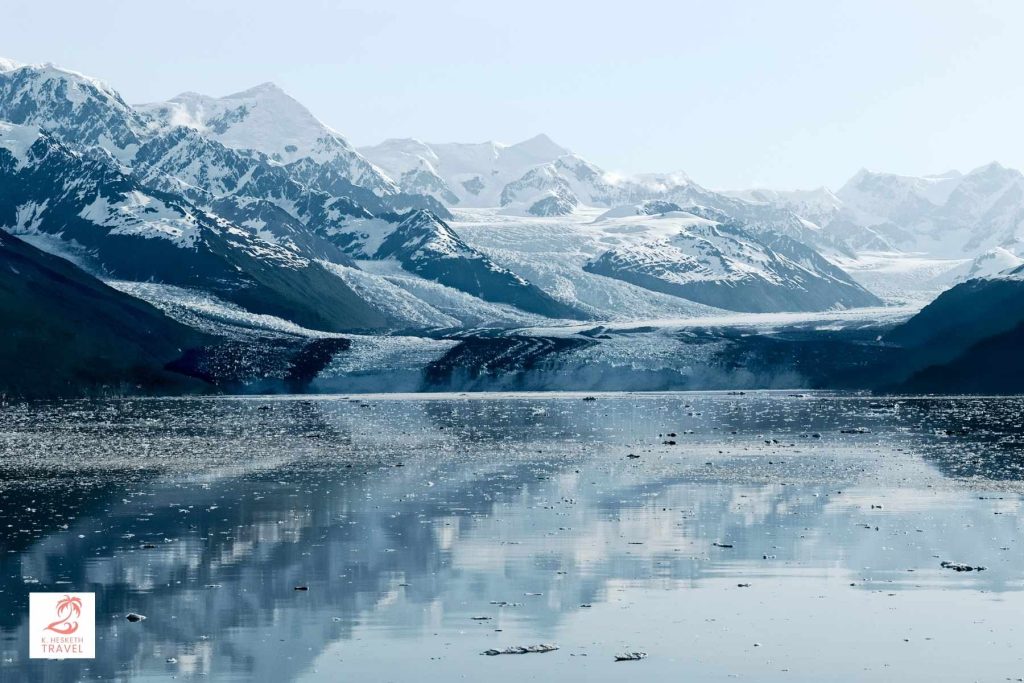
Bottom line: Glacier Bay is the gold standard experience, and if it’s important to you, make it a priority when choosing your itinerary. But Hubbard, Tracy Arm, and Endicott Arm are all genuinely spectacular. Don’t dismiss an itinerary simply because it doesn’t include Glacier Bay — especially if the other ports and pricing work better for you.
Which Cruise Line Is Best for Alaska?
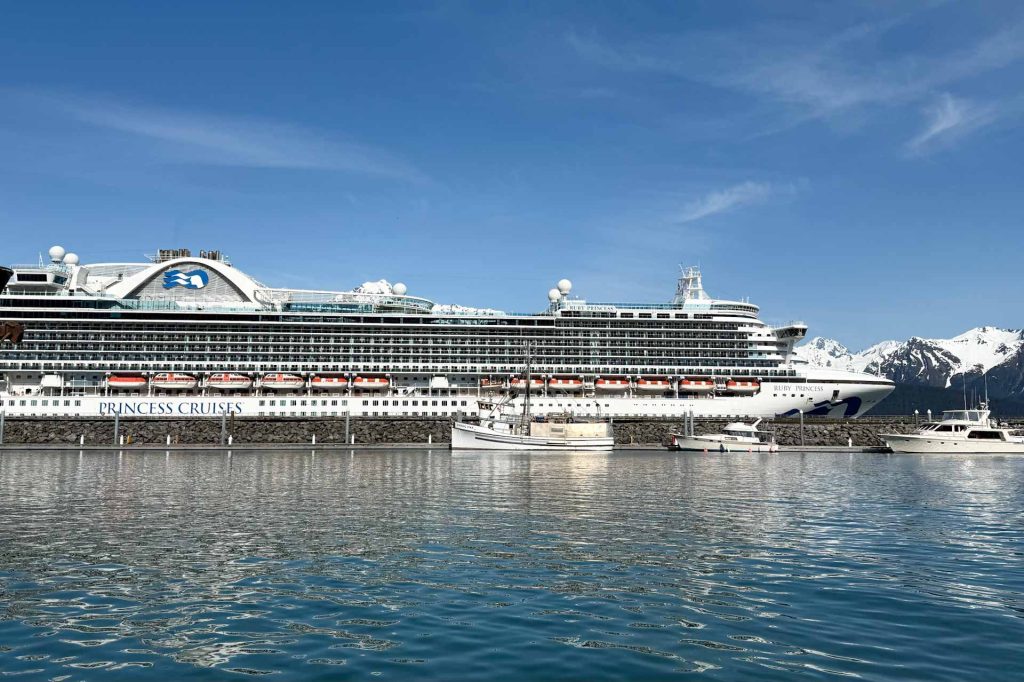
This is the question I hear more than any other when clients start planning Alaska — and the honest answer is that it depends entirely on what you’re looking for. Here’s how to think through it.
What to Look for in an Alaska Cruise Line
A few Alaska-specific factors are the key considerations when selecting a cruise line for your Alaska sailing. Just remember, there is no right or wrong answer, but how you feel about the following will help guide your decision:
- Glacier Bay access – Are they permitted to enter the national park area?
- Onboard naturalist or ranger programs — Do they have experts onboard to narrate what you’re seeing?
- Viewing decks and public outdoor spaces — What public areas are available to view the scenery and how well will you be able to see what’s going on around you?
- Ship size — Smaller ships get into narrower fjords and feel less like floating resorts; larger ships have more amenities
- Enrichment programming — Do they offer lectures, wildlife talks, cultural presentations?
The Main Players: A Quick Roundup
Holland America Line (HAL) is, by some expert assessments, the gold standard for Alaska cruising. They have more Glacier Bay permit days than any other large cruise line, so more of their itineraries feature this highlight. They’ve been sailing Alaska for over 70 years, their ships are well-suited to the destination (mid-size, excellent viewing decks), and their onboard programming — including a dedicated Alaska naturalist program called “Cruising Alaska as a National Park” — is often lauded by cruisers who value historical expertise and educational depth. For 50+ travelers especially, Holland America’s mature, enrichment-focused atmosphere is a natural fit. HAL is the only line that offers Land+Sea Journeys that extend into Canada’s Yukon Territory.
Princess Cruises runs neck-and-neck with Holland America as a top choice. They also hold significant Glacier Bay access, their ships have exceptional forward observation lounges (the “Lido” deck areas are superb for scenic cruising), and their Alaska expertise shows in the destination-specific programming. Their “North to Alaska” program also brings local naturalists and even sled dog puppies onboard. Princess is also the dominant player in Alaska CruiseTours — more on that below. A solid choice for mature travelers that also welcomes families.
Pro Tip: Princess’ Discovery at SEA partnership makes the line a top pick for multi-generational families, blending educational opportunities that span the age groups with Medallion Class technology that simplifies the entire sailing experience.
Celebrity Cruises brings a more upscale, design-forward experience to Alaska — beautiful ships, excellent dining, and a sophisticated atmosphere. Their Alaska itineraries do not include Glacier Bay, but visit other glaciers, such as Dawes or Hubbard. Celebrity is popular with the 40+ crowd and those who appreciate premium food and drinks. A great option for couples and adults who prize comfort, service and modern amenities. Just be sure to check deck plans for the individual ship assigned to the itinerary. On Edge class ships, the Private Retreat area is located at the front of the ship, meaning there is no forward viewing area for passengers not booked within this exclusive stateroom category.
Royal Caribbean is best suited for travelers who want a big-ship experience with lots of onboard activities and family-friendly amenities. Their Alaska itineraries tend to be less immersive than Holland America or Princess, but if you have kids who need entertainment options or you enjoy a lively ship atmosphere, they deliver. Check deck plans to ensure that the ship you’ll be sailing offers forward viewing areas where passengers can gather to see sites such as glaciers.
Norwegian Cruise Line offers competitive pricing and the “Freestyle” dining and scheduling approach, with no fixed dining times or assigned seating, that appeals to independent travelers as well as families. Their Alaska itineraries include Glacier Bay on select sailings, but itineraries are not as education focused as lines such as Holland America or Princess. Good for first-timers who prioritize flexibility and value over education and immersion. As with Celebrity and Royal, be sure to check deck plans to see what viewing areas are available.
Disney Cruise Line offers a small number of Alaska sailings each season, typically from Vancouver, and are usually considered the largest jewel in the crown of Alaska sailings for families with children. The immersive Disney experience is fully intact, the naturalist programming is thoughtfully done, and onboard kids clubs provide the perfect mix of entertainment and education. If you’re sailing with young kids, Disney Alaska is magical. Disney ships offer prime outdoor viewing areas for watching the spectacular sites of Alaska float by.
Viking (ocean cruises) brings their signature understated Scandinavian elegance to Alaska — no casinos, no kids under 18, and excellent cultural enrichment. A superb choice for 50+ travelers who appreciate thoughtful design, great food, and a quieter shipboard atmosphere. Viking has no access to Glacier Bay National Park. Viking ships offer both the including the indoor Explorer’s Lounge and outdoor viewing areas for passengers to watch the sights.
Pro Tip: Booking a balcony stateroom can be a real asset on any line when it comes to glacier viewing. Since most ships will spin a whol 360 degrees, passengers can sit on their own balcony and still catch sight of the glacier, though you’ll see it for far less time than guests who gather on forward facing decks.
Which Cruise Line Should you Choose When Sailing to Alaska?
- Best for 50+ Travelers: Holland America, Princess, Viking, and Celebrity are consistently the top choices for travelers in the 50+ range. All emphasize enrichment programming, comfortable paces, excellent dining, and expert Alaska narration. Holland America in particular feels designed for curious, experience-focused travelers who want to understand what they’re seeing.
- Best for Families: Disney, Norwegian, and Royal Caribbean have the strongest family programming — robust kids’ clubs, family dining options, and activities for various ages. Princess is also solid for multi-generational travel given their cruisetour depth.
Should I Sail from Seattle or Vancouver for an Alaska Cruise?

Both Seattle and Vancouver are major Alaska cruise embarkation ports, but the choice between them is more meaningful than it might first appear.
Routing and Scenic Differences
Embarkation from Seattle means you can fly in and out of U.S. Airports, but ships often spend the first 24–36 hours traveling north along the coast of Washington and British Columbia, before entering the inside passage. Unless the itinerary has you sailing east of Vancouver Island, you’ll spend more time in open waters. Some lines sail east when traveling one direction, while sailing west of the island in the opposite direction.
Embarkation from Vancouver puts the ship in the Inside Passage sooner and may sail between Vancouver Island and the British Columbia mainland. The scenery begins almost immediately, the fjords start earlier in the journey, and you spend less time in open ocean. Many experienced Alaska cruisers prefer Vancouver departures for exactly this reason.
Pro Tip: If your cruise departs from Seattle, prepare to make a stop in Victoria, Canada at some point during your itinerary. Because of the Passenger Vessel Services Act, foreign-flagged ships (such as Princess, Celebrity, Disney, Holland America, etc.) cannot transport passengers between two different U.S. ports without stopping at a foreign port.
Passport and Customs Considerations
Departing from Seattle is an entirely U.S. itinerary, so you don’t need a passport when flying, provided you have a Real ID. I do, however, recommend that everyone cruise with a passport. Should you suffer a medical emergency, or otherwise need to depart the ship in Canada, you will need a passport to enter the country and reenter the U.S.
Departing from Vancouver requires crossing into Canada, which means:
- U.S. citizens need a valid passport
- You’re subject to Canadian customs and entry requirements
- Non-U.S. travelers need to verify their Canadian entry requirements
Pro Tip: Canada has strict rules when it comes to crime convictions considered felonies in Canada. This includes DUI charges, even if the U.S. classifies such charges as a misdemeanor. Since the U.S. and Canada share data, all passenger manifests are reviewed, and cruisers with applicable offenses may be denied entry into Vancouver or removed from the ship as it sails into a Canadian port (as all do because of the Passenger Vessel Services Act mentioned above). If you’ve been convicted of a misdemeanor or felony charge in the U.S., always consult with an attorney before booking an Alaska cruise or any other cruise that makes stops in Canada.
Pros and Cons of Sailing from Seattle
- Open Ocean (con for some): To reach Alaska, ships from Seattle typically sail west of Vancouver Island, crossing open Pacific Ocean water, leaving less time for the sights of the Inside Passage).
- Motion (con for some): More time on open water can mean a higher likelihood of rougher seas (more wave motion) compared to the inner route.
- Convenience (Pro): Seattle is often preferred by U.S. residents for easier flights and logistics.
- Seattle has a world-class airport (SEA) with excellent connectivity, and the cruise terminal is a reasonable distance. Seattle itself is a wonderful city to spend a day or two before or after the cruise — Pike Place Market, the waterfront, excellent coffee and seafood.
Pros and Cons of Sailing from Vancouver
- Inside Passage Access: Many ships from Vancouver sail east of Vancouver Island, entering the protected, scenic Inside Passage almost immediately. This provides more time for scenic viewing on both sides of the ship.
- Calmer Waters: Protected on both sides, the route often offers calmer waters, great for those prone to motion sickness.
- The cruise terminal (Canada Place) is right downtown — easily one of the most picturesque embarkation experiences anywhere.
- Many seasoned travelers consider Vancouver one of the most beautiful and visitor-friendly cities in North America. The international airport is well-connected, and Granville Island, Stanley Park, and Gastown are all worth your time.
The overall recommendation: If Glacier Bay access and maximum Alaska scenery are priorities, and you’re comfortable with the passport requirement, Vancouver tends to be the stronger choice. If simplicity, lower cost, or staying in U.S. waters matters to you, Seattle is perfectly excellent.
What Alaska Excursions Are Actually Worth the Money?

This is where Alaska cruising gets personal. You can spend anywhere from $50 for a walking tour to $1,000+ for a helicopter glacier landing — and not everything justifies the price tag. Here’s an honest rundown based on what travelers consistently report.
- Whale Watching (Juneau) — Highly Recommended
- Helicopter Glacier Landings (Juneau) — Worth It If You Can Swing It
- Dog Sledding on a Glacier (Juneau or Skagway) — A Bucket-List Splurge but expensive
- White Pass & Yukon Route Railway (Skagway) — Must-Do Alaska cruise shore excursion in Skagway
- Floatplane / Flightseeing Tours — Highly Recommended
- Misty Fjords by Floatplane (Ketchikan) — Spectacular
- Bear Viewing Tours (Ketchikan area — Anan Wildlife Observatory) — Extraordinary If Available
- Kayaking in Fjords — Wonderful if weather conditions are favorable
- Fishing Excursions — Worth It If You’re a Fishing Person
Do I Need a Balcony Cabin for an Alaska Cruise?
Few Alaska cruise questions generate more passionate debate — and for good reason. The answer genuinely depends on how you travel, your budget, and your priorities.
The Case FOR a Balcony Stateroom on an Alaska Cruise
The argument for a balcony in Alaska is stronger than for almost any other destination. Here’s why: Alaska scenery happens at all hours. You might wake up at 6 a.m. to a humpback whale surfacing alongside the ship. You might drift through Glacier Bay with ice floes floating past your room. A bald eagle might land on something 20 feet away while you’re having coffee. Without a balcony, you’d miss all of that — or you’d have to race to a public deck.
Alaska also means extended daylight hours — especially in June and July, when it may not get fully dark until 11 p.m. That means more hours of potential scenery, and a balcony lets you enjoy it from your room at any moment.
If you’re wondering what past Alaska cruisers have to say about the subject, it’s telling. Many travelers who did Alaska in an inside cabin — and enjoyed it — say they’d upgrade to a balcony for any return trip.
The Case Against (Making It Work Without One)
The most compelling reason to skip a balcony is the cost. A balcony can add $500–$1,500 per person to your fare, which is real money that could fund two or three exceptional shore excursions. And here’s the truth: the best glacier viewing is done from the ship’s public decks anyway. During Glacier Bay and other scenic cruising days, everyone is outside together — on the bow, on the promenade deck, crowded around the rails with cameras out. No balcony was ever going to beat that energy.
Alaska is also famously cool and frequently overcast. Time actually spent sitting on a balcony can be more limited than you’d expect, especially in May, September, and even parts of summer. Also, noted as a pro above, the extended daylight of late spring and early summer travel can make it difficult for some travelers to sleep in a balcony stateroom, even with blackout shades.
Tips for Getting Great Views Without a Balcony
- Claim your spot early on scenic cruising days. Get to the forward observation lounge or the bow deck before the ship enters the fjord or National Park.
- Learn your ship’s layout. Every ship has its little hideaways — quieter deck areas or lookout points that fill up less quickly.
- The promenade deck (if your ship has one) gives you 360-degree access on the outside of the ship. It’s cold, but it’s unobstructed.
- Be flexible with timing. If the main glacier approach is at 10 a.m., that’s when most people will be on deck or at other prime view spots. Sunrise and evening sailings through scenic passages can be quieter and just as beautiful.
Pro Tip: If you’re sailing Holland America or Princess, their forward observation lounges are exceptional — warm, glassed-in spaces with panoramic views that honestly rival a balcony for glacier days. Many inside-cabin travelers spend hours happily parked in these spaces.
Alaska Cruise Recommendations
For a first Alaska cruise: If it fits your budget without sacrificing important shore excursions or significant financial stress, a balcony is a beautiful upgrade. But a well-planned inside cabin experience with intentional public deck time is genuinely wonderful, and many travelers have had deeply memorable Alaska cruises without one.
For 50+ travelers who love to linger over scenery: A balcony becomes increasingly worth it. There’s nothing like watching Alaska unfold from a private perch over morning coffee.
Should I Do an Alaska CruiseTour?
If you’ve spent any time looking at Alaska cruise options, you’ve probably seen the phrase “CruiseTour” attached to some itineraries. Here’s exactly what that means and whether it’s right for you.
What Is a CruiseTour?
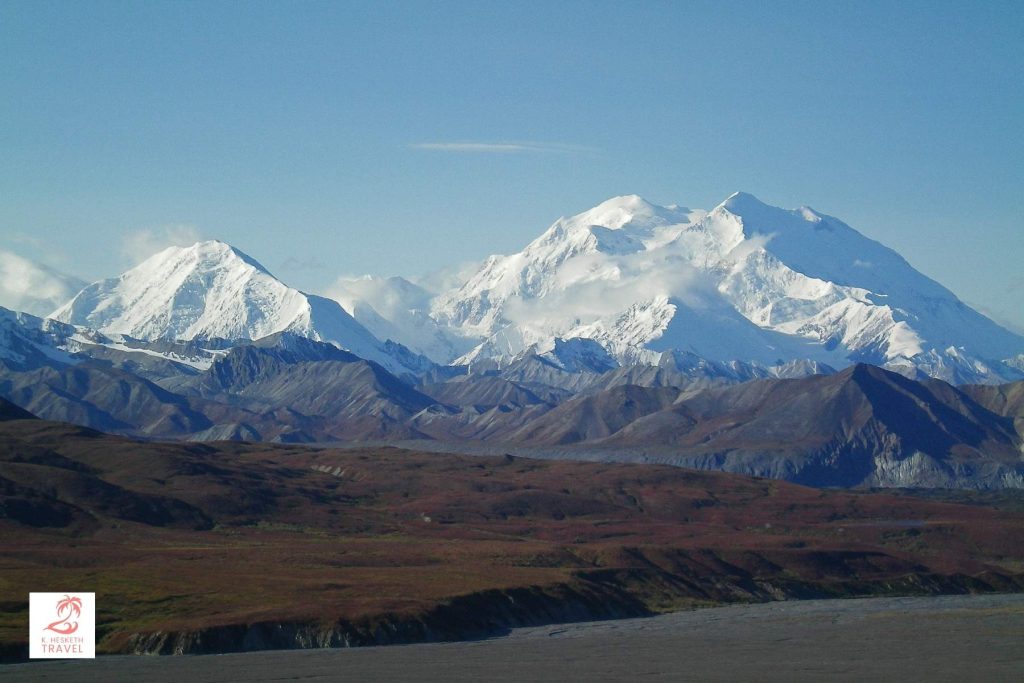
An Alaska CruiseTour combines a standard Alaska cruise with a land tour of Alaska’s interior, packaged together under one booking. The land portion typically takes you to places a ship simply can’t reach — most importantly, Denali National Park, considered by some travelers to be one of the most awe-inspiring places in Alaska.
Benefits of a CruiseTour
- You see Alaska’s interior — which is a completely different world from the coastal Southeast.
- Denali is North America’s tallest peak, and seeing it (weather cooperating) is staggering.
- The logistics are completely handled. You travel by ship, train, and motorcoach between lodges without coordinating anything yourself.
- Accommodations in premier lodges are included in the cost of your CruiseTour, and some lines offer flexible pricing that can include meals and luxury services.
- You get a deeper, more complete picture of Alaska than a cruise alone provides.
- The included Alaska Railroad scenic rail journey is one of the most beautiful train rides in the world, offered on most CruieTours.
A typical Princess, Holland America or Celebrity CruiseTour might include:
- 7 nights of cruising (the full Inside Passage experience with Glacier Bay)
- 3–5 nights on land, including Denali National Park, Anchorage, Fairbanks, and/or the Kenai Peninsula
- Scenic rail travel between points on the Alaska Railroad (the train journey itself is extraordinary — you sit in glass-domed railcars watching wilderness scroll past)
Pro Tip: Princess and Holland America are the dominant CruiseTour operators, and they’ve both invested heavily in the infrastructure: Princess owns their own resort lodges, and Holland America has access to premium Westmark Hotels throughout the state. Celebrity is another strong contender, and for families, Disney Cruise Lines also offers land based packages through Adventures by Disney, one of the best group tour experiences available.
CruiseTour Before or After the Cruise?
This is a matter of preference, and travelers are genuinely split. Here’s what the experience actually looks like:
Land first, cruise after — You fly into Anchorage, spend several days touring interior Alaska (Denali, Fairbanks), then travel by rail to the port and board the ship. The advantage: you unpack from your “active touring” phase and then get to relax for 7 nights on the ship as a reward. Many travelers find this order more comfortable, particularly for older adults or those who find land touring tiring. You also end the trip on the ship, which means a gentler pace to close out the vacation.
Cruise first, land after — You board the ship first and cruise north to Anchorage, then transfer to the land tour. Some travelers prefer the dramatic reveal of Denali and the interior as a grand finale. However, the “vacation momentum” can work against you — many people find they’re somewhat exhausted after 7 days at sea and then have to shift gears to active land touring.
Is a CruiseTour Worth the Extra Cost?
A CruiseTour will typically add $1,000–$3,000+ per person to your vacation cost compared to the cruise alone — covering lodging, rail, and land transportation, though not every meal or activity.
It’s worth it if:
- You want to see Denali — it’s deeply difficult to justify going all the way to Alaska without at least trying to see North America’s tallest peak and crossing a national park off your bucket list
- You have extended time available (CruiseTours typically run 10–15 days total)
- You prefer the ease of a fully managed itinerary over piecing together independent Alaska travel yourself
- This is likely to be your only Alaska trip
It may not be worth it if:
- You’re short on time (less than 10 days total)
- You’ve already visited Alaska’s interior independently
- Your budget is tightly stretched
For most first-time Alaska visitors with the time and budget, I’d say to seriously consider adding an Alaska CruiseTour to your sailing. The cruise alone is a maginificent glimpse into Alaska, but a CruiseTour fleshes out that picture, allowing you to see more of what Alaska has to offer.
Ready to Plan Your Alaska Adventure?
Alaska is one of those trips that stays with you. The glaciers, the wildlife, the sheer scale of the wilderness — it’s humbling and energizing in equal measure. And getting the details right — the right itinerary, the right cruise line, the right month, the right excursions — makes the difference between a good trip and a trip you’ll spend the next decade telling people about.
If you’ve read through all of this and you’re feeling more excited than you were before — but maybe also realizing there’s a lot to sort through — that’s exactly where I come in. I work with each of my clients one-on-one to match the right cruise to the right traveler. I
I’d love to help you plan this trip. Reach out for a free consultation — or request a quote below.
More Essential Cruise Information:

Kathleen Hesketh is a travel advisor, travel writer, and lifelong explorer with more than a decade of experience helping travelers plan memorable vacations. As an affiliate of Main Street Travel, LLC, she specializes in cruises, Disney destinations, guided tours, and custom travel experiences for families, couples, solo travelers, and adults over 50. Kathleen is a graduate of Disney’s College of Knowledge, a CLIA-affiliated cruise professional, and a certified specialist with leading travel brands including Viking and Royal Caribbean. Through her travel website, K Hesketh Travel, she combines professional expertise with practical, real-world advice to help travelers plan with confidence.